
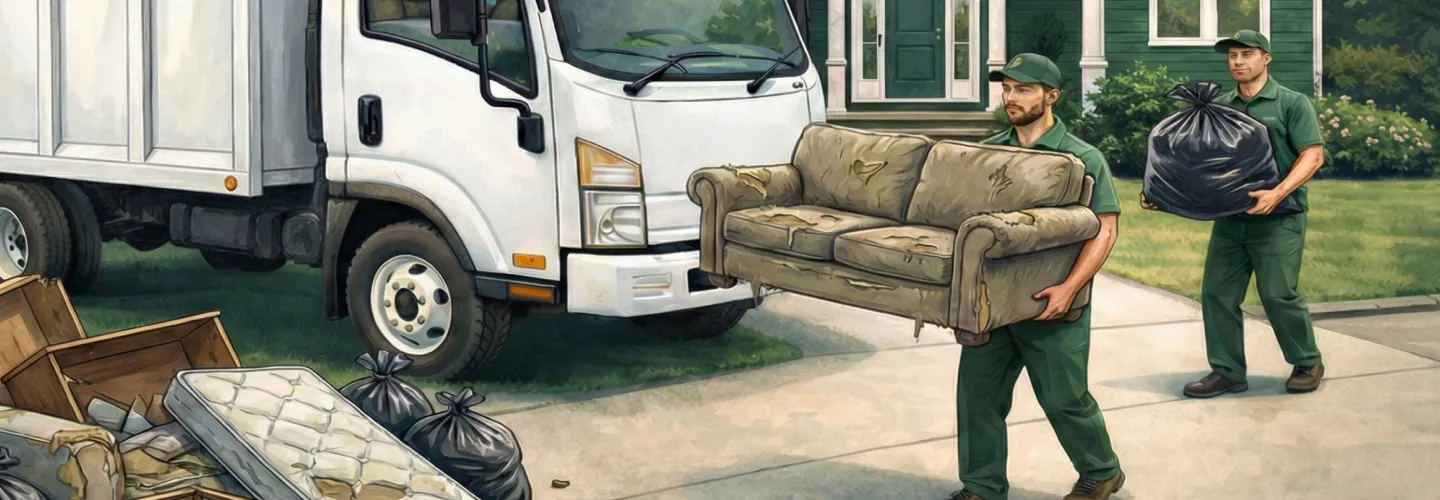
Marietta Restaurants Junk Removal Services
Choose our Restaurants Junk Removal for prompt, discreet, and eco-friendly service that keeps your dining space clean, compliant, and welcoming for guests.
Get a Free QuoteOur Marietta Junk Removal Services
Restaurants Junk Removal in Marietta, GA – Local Service Guide
Restaurants in Marietta, GA face unique junk removal challenges, from regular kitchen equipment upgrades to post-renovation cleanouts. In busy areas like Marietta Square and along Roswell Road, timely removal is crucial to maintain operations and comply with local health codes. Restaurant junk often includes bulky appliances, furniture, and food waste, requiring specialized handling and coordination to minimize disruption. Local providers understand the importance of discretion and after-hours service, especially for high-traffic establishments. Proper disposal and recycling are essential, with options tailored to Marietta’s commercial districts and local regulations. For guidance on disposal rules and city resources, visit the Marietta Public Works Department.
Key Considerations for Restaurants Junk Removal in Marietta
- Schedule pickups during off-peak hours to avoid customer disruption
- Check for required permits for large-scale disposals or renovations
- Use approved disposal and recycling channels to meet city standards
- Ensure easy access for removal trucks in busy areas like Franklin Gateway
- Plan for high-volume events or seasonal cleanouts
- Coordinate with property managers for shared spaces or strip malls
Benefits of Restaurants Junk Removal in Marietta
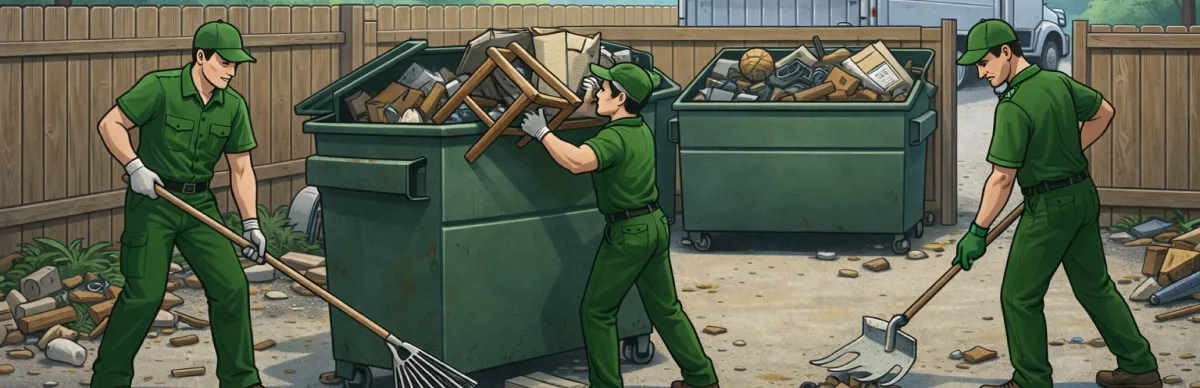
Fast and Reliable Service
Eco-Friendly Disposal
Licensed and Insured Team
Flexible Scheduling Options
Competitive Pricing
Comprehensive Junk Removal
Coordinating Restaurant Equipment Disposal with Marietta's Public Works Department
Restaurants undergoing renovation, closure, or equipment upgrades in Marietta must coordinate bulk waste removal through proper municipal channels. The City of Marietta's Public Works Department oversees sanitation services, street maintenance, and commercial waste compliance within city limits. Restaurant operators should be aware of the following requirements when scheduling junk removal:
- Commercial waste generated by restaurants—including broken booths, countertops, shelving, and non-functioning kitchen fixtures—is not eligible for residential curbside bulk pickup programs
- Commercial haulers operating within Marietta must maintain valid business licenses and comply with city ordinances governing waste transport on public roadways
- Scheduling removal during non-peak traffic hours helps avoid conflicts with Marietta's traffic operations and minimizes disruption to neighboring businesses
- Debris placement on public sidewalks or rights-of-way without authorization may result in code enforcement action
Restaurant owners should contact Public Works before initiating large-scale cleanouts to confirm disposal routing and any applicable commercial waste requirements.
Marietta Public Works Department
205 Lawrence Street, Marietta, GA 30060
Phone: (770) 794-5530
Official Website: Marietta Public Works Department
Georgia's Solid Waste Management Act and Restaurant Waste Compliance
Restaurant junk removal in Marietta must comply with the Georgia Comprehensive Solid Waste Management Act (O.C.G.A. § 12-8-20) administered by the Georgia Environmental Protection Division (GA EPD). This state law establishes the regulatory framework for solid waste handling, transportation, and disposal across all Georgia municipalities, including Marietta. Key compliance points for restaurant junk removal include:
- Waste characterization: Restaurant debris must be properly classified—general solid waste (furniture, fixtures, décor) versus regulated materials (refrigerants, cooking oils, fluorescent lighting)
- Transporter requirements: Haulers moving commercial solid waste must comply with GA EPD rules for manifesting, vehicle standards, and disposal at permitted facilities
- Prohibited disposal: Hazardous materials such as cleaning solvents, pesticides, and mercury-containing lamps cannot be placed in standard solid waste streams
- Grease trap waste and used cooking oil require separate disposal through licensed liquid waste haulers and may not be mixed with solid junk removal loads
- Landfill restrictions: Lead-acid batteries and appliances containing refrigerants are banned from Georgia landfills without prior processing
Violations of state solid waste regulations can result in civil penalties and potential facility closure orders from GA EPD.
Marietta Building Permits and Code Compliance for Restaurant Renovation Debris
When restaurant junk removal is associated with interior demolition, remodeling, or tenant buildout, Marietta's Community Development Department may require building permits before work begins. Removing fixed equipment such as walk-in coolers, exhaust hoods, built-in cabinetry, or structural elements triggers permit review. Restaurant operators and their contractors should note:
- Demolition permits are required when removing load-bearing walls, HVAC ductwork, plumbing fixtures, or electrical systems during a restaurant cleanout
- Asbestos surveys may be necessary for buildings constructed before 1980; friable asbestos must be abated by a licensed contractor per EPA regulations before demolition debris removal
- Fire code clearance from the Marietta Fire Department is required when removing fire suppression systems, hood suppression equipment, or gas-line-connected appliances
- Stormwater protection measures must be in place during exterior debris staging to prevent runoff contamination per Marietta's environmental compliance standards
Marietta Building Permits Division
205 Lawrence Street, Marietta, GA 30060
Phone: (770) 794-5560
Official Website: Marietta Building Permits
Restaurant owners should submit permit applications through the Marietta Community Development Department well in advance of scheduled removal dates, as plan review may require five to ten business days.
Recycling and Diversion Requirements for Restaurant Equipment and Materials
Marietta restaurant operators are encouraged to maximize material recovery and recycling when disposing of outdated or surplus equipment. The Marietta Environmental Compliance program supports stormwater protection and environmental quality initiatives that align with responsible waste diversion. Key recycling considerations for restaurant junk include:
- Scrap metal recovery: Stainless steel prep tables, shelving units, exhaust hoods, and broken commercial appliances contain valuable ferrous and non-ferrous metals accepted at licensed scrap facilities in Cobb County
- Refrigerant recovery: Walk-in coolers, reach-in refrigerators, and ice machines contain regulated refrigerants that must be recovered by an EPA Section 608-certified technician before the unit can be scrapped or landfilled
- Electronics recycling: Point-of-sale systems, monitors, security cameras, and networking equipment are classified as e-waste; Georgia does not currently mandate e-waste recycling statewide, but Cobb County offers periodic electronics collection events
- Fluorescent lamp recycling: T8 and T12 fluorescent tubes common in restaurant kitchens contain mercury and must be recycled through a universal waste handler rather than disposed in standard waste streams
- Furniture and fixture donation: Usable tables, chairs, booths, and smallwares may be donated to local nonprofit organizations, extending item life and reducing landfill volume
Safe Handling of Hazardous Materials During Marietta Restaurant Cleanouts
Restaurant junk removal frequently involves materials that require specialized handling beyond standard solid waste procedures. Marietta-area restaurant operators and removal crews must identify and segregate hazardous or regulated items before loading. Critical safety and handling requirements include:
- Cooking oil and grease: Used fryer oil must be collected by a licensed rendering or recycling service; pouring oil into drains violates Marietta's Water Department pretreatment regulations and can result in sewer blockages and fines
- Cleaning chemicals: Commercial degreasers, sanitizers, oven cleaners, and pest control products are classified as hazardous waste and must be disposed through Cobb County's Household Hazardous Waste collection program—not placed in junk removal loads
- Lead paint: Restaurants in older Marietta buildings constructed before 1978 may have lead-based paint on walls, trim, or fixtures; removal must follow EPA Lead Renovation, Repair, and Painting Rule requirements
- Propane tanks and CO2 canisters: Pressurized cylinders from beverage dispensing systems and outdoor heating units are prohibited from landfill disposal and must be returned to suppliers or taken to authorized collection points
- OSHA compliance: Removal crews must use appropriate personal protective equipment when handling heavy commercial equipment, sharp metal edges, and chemical residues common in restaurant environments
Marietta Environmental Compliance Division
205 Lawrence Street, Marietta, GA 30060
Phone: (770) 794-5530
Official Website: Marietta Environmental Compliance
What Neighborhoods Do We Serve Throughout Marietta, GA?
- Marietta Square / Downtown Historic District: Restaurants in this walkable commercial core often occupy older brick buildings with narrow rear alleys and limited loading zones. Historic district guidelines may apply to exterior renovation debris removal, and right-of-way coordination is essential for truck staging on congested streets.
- Franklin Gateway: This commercial corridor features numerous restaurant properties in strip centers and standalone buildings. Wide parking lots generally allow straightforward equipment loading access, though high traffic volume requires careful scheduling during off-peak hours.
- East Marietta / Roswell Road Corridor: A dense mix of independent restaurants and chain establishments lines this busy corridor. Multi-tenant commercial buildings may require landlord coordination and shared loading dock scheduling for large-scale cleanouts.
- West Marietta / Dallas Highway: Newer commercial developments along this growth corridor feature modern restaurant buildouts with standard loading access. Removal projects here often involve lease turnover cleanouts requiring rapid turnaround.
- Whitlock Avenue District: This mixed-use area near Kennesaw Mountain includes restaurants in both historic storefronts and newer retail centers. Older structures may present narrow doorways and stairwell access challenges for large equipment removal.
- South Marietta / Powers Ferry Area: Suburban restaurant locations in this area typically offer ample driveway and parking lot access for removal vehicles. Proximity to major highways facilitates efficient transport to disposal and recycling facilities in greater Cobb County.